Wagner
Welten
Explore
Opera archive

Opera world 09 / WWV 90

TristanundIsolde

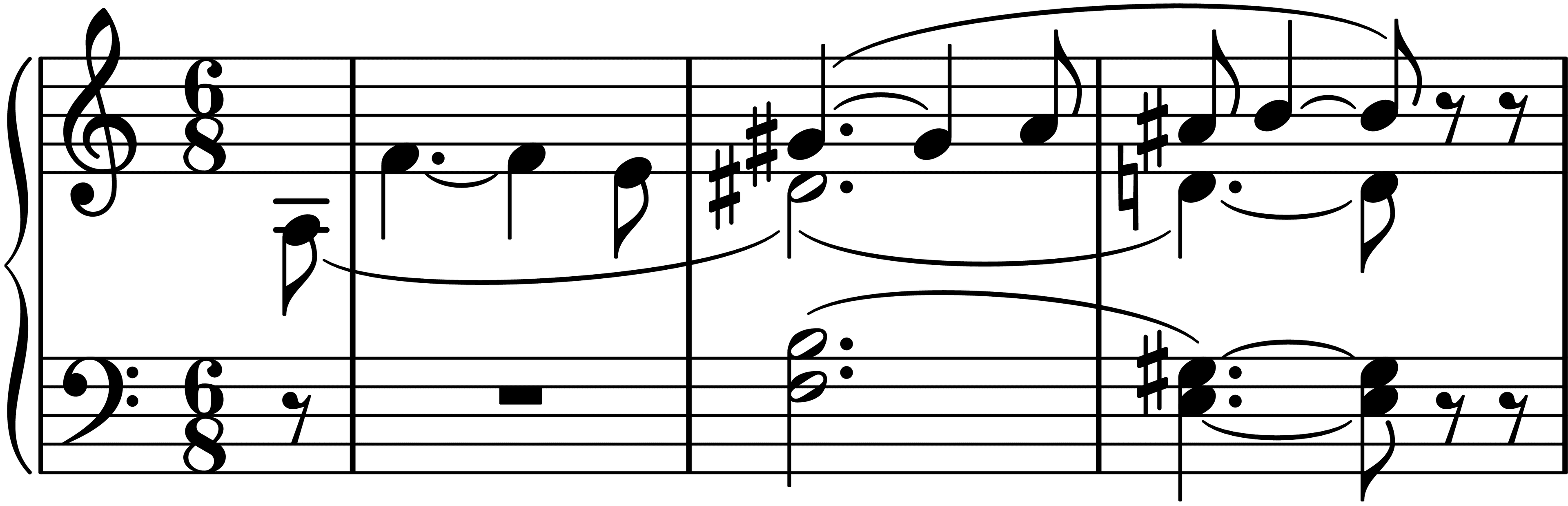
The chord that refuses to arrive.

Desire becomes musical structure: approach, suspension, another approach.

Prologue / A passage with no safe arrival

A voyage toward marriage becomes a passage beyond the social world.

Isolde is being carried to Cornwall as King Marke's bride. Tristan, the man escorting her, is also the man who killed Morold and once came to her in disguise for healing. Their history is already inside the ship before the potion is raised.

The drama does not ask whether desire is reasonable. It asks what remains when every public identity can no longer contain it.
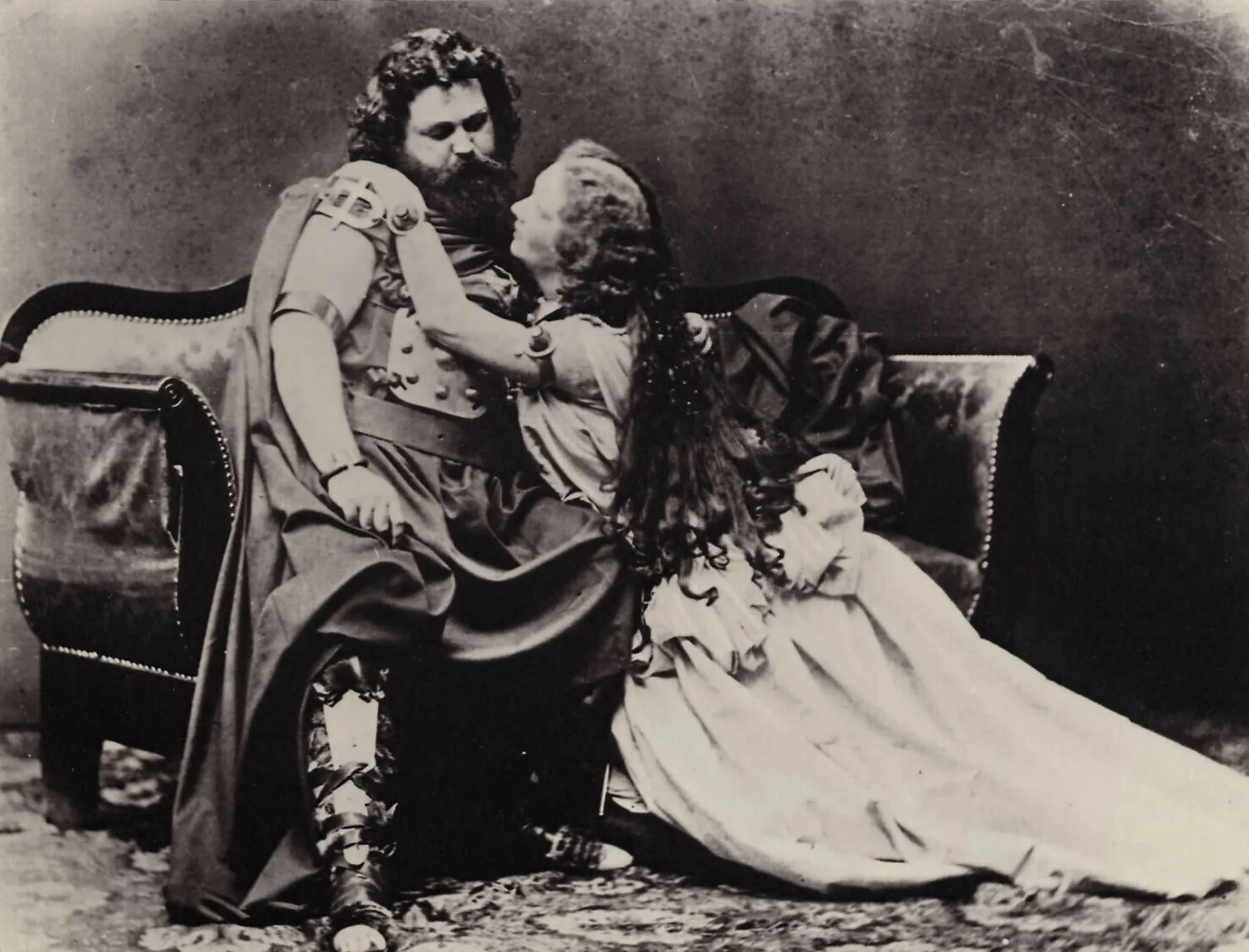
Ludwig and Malwine Schnorr von Carolsfeld as Tristan and Isolde in the 1865 Munich premiere

Archive / Munich, 1865

The first bodies inside the impossible music.

Ludwig and Malwine Schnorr von Carolsfeld created the title roles at the premiere. The photograph returns the opera from abstraction to two performers carrying its unprecedented demands in real time.

01 / The action

Three acts.
Three states of time.

Ship. Night. Waiting.
I

Day / Passage

The ship

At sea, approaching Cornwall

Tristan is carrying Isolde to Cornwall to marry his uncle, King Marke. She remembers that Tristan killed Morold and that she once healed Tristan's wound without taking revenge. She orders a death potion for them both.

Turning point

Brangäne replaces death with love. The drink does not create an easy romance. It removes the last defence against what is already present.

II

Night / Suspension

The night

Marke's garden, at night

While Marke is away, Isolde extinguishes the torch that marks danger. Tristan enters. Their long duet imagines night as a realm beyond names, duties and separation.

Turning point

Brangäne's warning is ignored. Melot exposes the lovers, Marke returns, and Tristan answers discovery not with escape but with a question that points toward death.

III

Waiting / Dissolution

Kareol

Kareol, Tristan's ancestral home

Wounded and delirious, Tristan waits for Isolde's ship. The shepherd's melody measures hope against an almost motionless landscape. When she arrives, he tears away his bandages and dies in her arms.

Turning point

Marke arrives too late with forgiveness. Isolde hears the world around Tristan transform, then follows the sound beyond ordinary perception.

02 / The voices

No one stands
outside the night.

Six people hold the drama together. Each hears the central relationship from a different moral distance.
01

Isolde

Irish princess / soprano

Healer, captive, intended bride and the opera's most lucid listener. She names the history everyone else tries to suppress.
02

Tristan

Knight of Cornwall / tenor

A celebrated public hero whose identity cannot survive the conflict between loyalty, memory and desire.
03

Brangäne

Isolde's companion / mezzo-soprano

The practical intelligence of the drama. Her substitution of the potion changes the action, while her watch call tries to protect what it unleashes.
04

King Marke

King of Cornwall / bass

Not a simple obstacle, but a betrayed friend whose grief gives the discovery scene its devastating moral weight.
05

Kurwenal

Tristan's companion / baritone

Loyalty made physical. He guards Tristan, celebrates him, misunderstands him and finally dies defending him.
06

Melot

Knight / tenor

Friend, rival and betrayer. His intervention brings the protected night back under the laws of day.

03 / Listening map

Listen for what
does not resolve.

These are listening landmarks, not a complete motif dictionary. The score is always moving between them.
  1. 01

    Prelude, opening bars

    The opening wound

    The prelude begins with a rising gesture and an answering descent. The harmony opens a space but refuses to close it.
  2. 02

    Across all three acts

    Arrival postponed

    Cadences keep bending into the next phrase. Resolution is not removed, it is delayed until delay itself becomes the drama.
  3. 03

    Act II love duet

    Day against night

    Day carries names, rank, marriage and honour. Night dissolves those boundaries. The opposition is musical as much as verbal.
  4. 04

    Act II, Brangäne's warning

    A voice above the lovers

    Brangäne's watch call arrives from outside the visible scene, suspended over the duet like distant knowledge.
  5. 05

    Act III, Isolde's closing scene

    The withheld release

    The score saves its deepest sense of arrival for Isolde's final transformation, after the lovers can no longer inhabit the world together.

Act II / Tristan and Isolde

Descend upon us, night of love.

The lovers do not ask night to hide them. They ask it to abolish separation.

04 / The work

The manuscript
behind the suspension.

Wagner wrote both poem and score. The surviving autograph lets the movement from literary source, draft and notation remain visible as a physical process.
Work
Tristan und Isolde, WWV 90
Form
Handlung in three acts
Written
1857–1859
Premiere
10 June 1865, Munich
Text and music
Richard Wagner
Literary horizon
The medieval Tristan tradition, especially Gottfried von Strassburg

The original score manuscript has been exhibited by the Richard Wagner Museum in Bayreuth. The museum also identifies Gottfried von Strassburg's Tristan epic among the literary foundations visible in Wagner's working process.

Richard Wagner Museum ↗Read a full synopsis ↗

05 / The living work

Where does
Tristan live now?

The performance world will connect this opera directly to verified dates, cities, theatres and productions. No invented calendar entries, only listings that can be traced back to their presenting institutions.

Open the performance world