Wagner
Welten
Explore
Opera archive
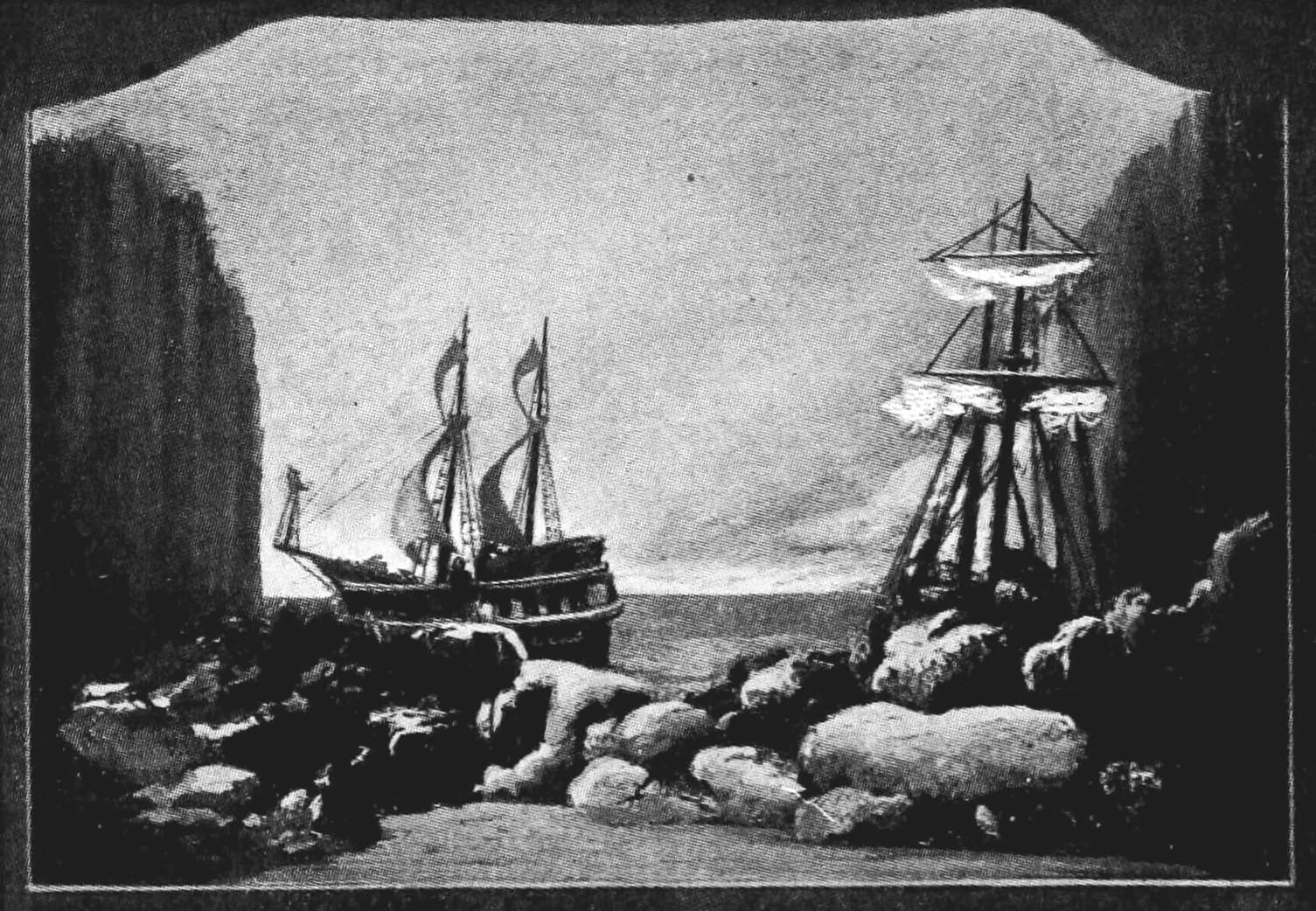
Historical stage setting for Act I of Der fliegende Holländer

Opera world 04 / WWV 63

Der fliegendeHolländer

Every seven years, the horizon becomes a door.

The sea will not permit an ending
Scroll to enter

01 / The dramatic threshold

The sea will not
permit an ending

A ship appears where no ship should be. Its captain is condemned to circle the world until fidelity releases him, and Senta has already turned his legend into the center of her inner life.

The opera is driven by two kinds of weather: the physical storm around the ships, and the psychic storm created when a human being tries to inhabit a myth completely.

04 / Der Holländer

Historical Act I stage design

02 / The action

The world changes
in movements.

This is a dramatic map, not a replacement for the full libretto. Each movement marks a change in what the characters believe is possible.
  1. I

    The arrival

    A black ship enters the real world

    A rocky Norwegian coast

    Daland's ship takes shelter. The Dutchman's vessel glides in, and wealth secures an invitation into Daland's home, where a daughter may become the answer to a curse.

    Dramatic turnA supernatural bargain is disguised as a social arrangement.
  2. II

    The recognition

    Senta meets the image she has rehearsed

    Daland's house

    While spinning wheels measure ordinary time, Senta sings the Dutchman's ballad. When he appears, portrait and person align with dangerous speed.

    Dramatic turnShe does not fall in love with a stranger, she steps into a story already complete in her mind.
  3. III

    The departure

    The curse mistakes doubt for truth

    The harbour at night

    The living sailors celebrate while the ghost crew answers from darkness. The Dutchman hears Erik confront Senta, assumes betrayal, and orders his ship back to sea.

    Dramatic turnSenta's final act closes the legend, but at a human cost the legend itself demanded.
Historical stage setting for Act I of Der fliegende Holländer
Archive fragment

Historical Act I stage design

Image source ↗

03 / The dramatic machine

What moves
beneath the plot.

Objects, musical ideas and theatrical systems carry memory across the work. These are three ways into its deeper construction.

Motion without arrival

The storm

Wind and sea are not scenery. They embody a life condemned to continue without direction or conclusion.
A story summons its subject

The ballad

Senta's song creates the Dutchman before he enters the room. Narrative becomes an active force.

Living rhythm / dead silence

The two crews

The harbour scene places ordinary celebration against spectral sound until both realities occupy the stage at once.

04 / Figures in the world

Six lines of
dramatic pressure.

Each figure occupies a different distance from the work's central conflict. Voice type is included as a practical listening guide.
01

The Dutchman

Bass-baritone

A captain condemned to endless voyage
02

Senta

Soprano

A young woman who lives inside the Dutchman's legend
03

Daland

Bass

A sea captain and Senta's father
04

Erik

Tenor

A hunter who loves Senta in the ordinary world
05

Mary

Mezzo-soprano

Senta's nurse and guardian of domestic order
06

The Steersman

Tenor

A sailor whose song opens human space inside the storm

05 / A line from the stage

Die Frist ist um.
The appointed time is over.

The first words already carry centuries of repetition.

The Dutchman, Act I

06 / The work in time

A stage world
with a physical history.

Dates and categories anchor the experience without reducing the opera to a catalogue entry. The archive remains visible behind the theatre.
Dramatic source
The legend of the Flying Dutchman
Setting
The Norwegian coast
First performance
Dresden, 2 January 1843
Dramatic shape
Three acts, often experienced without interval
WWV 63

Romantic opera in three acts

07 / The living work

Find the next
Der Holländer.

The performance world will connect this opera to verified dates, theatres and productions across Europe. The architecture is ready for listings that can be traced directly to presenting institutions.

Open performances