Wagner
Welten
Explore
Opera archive
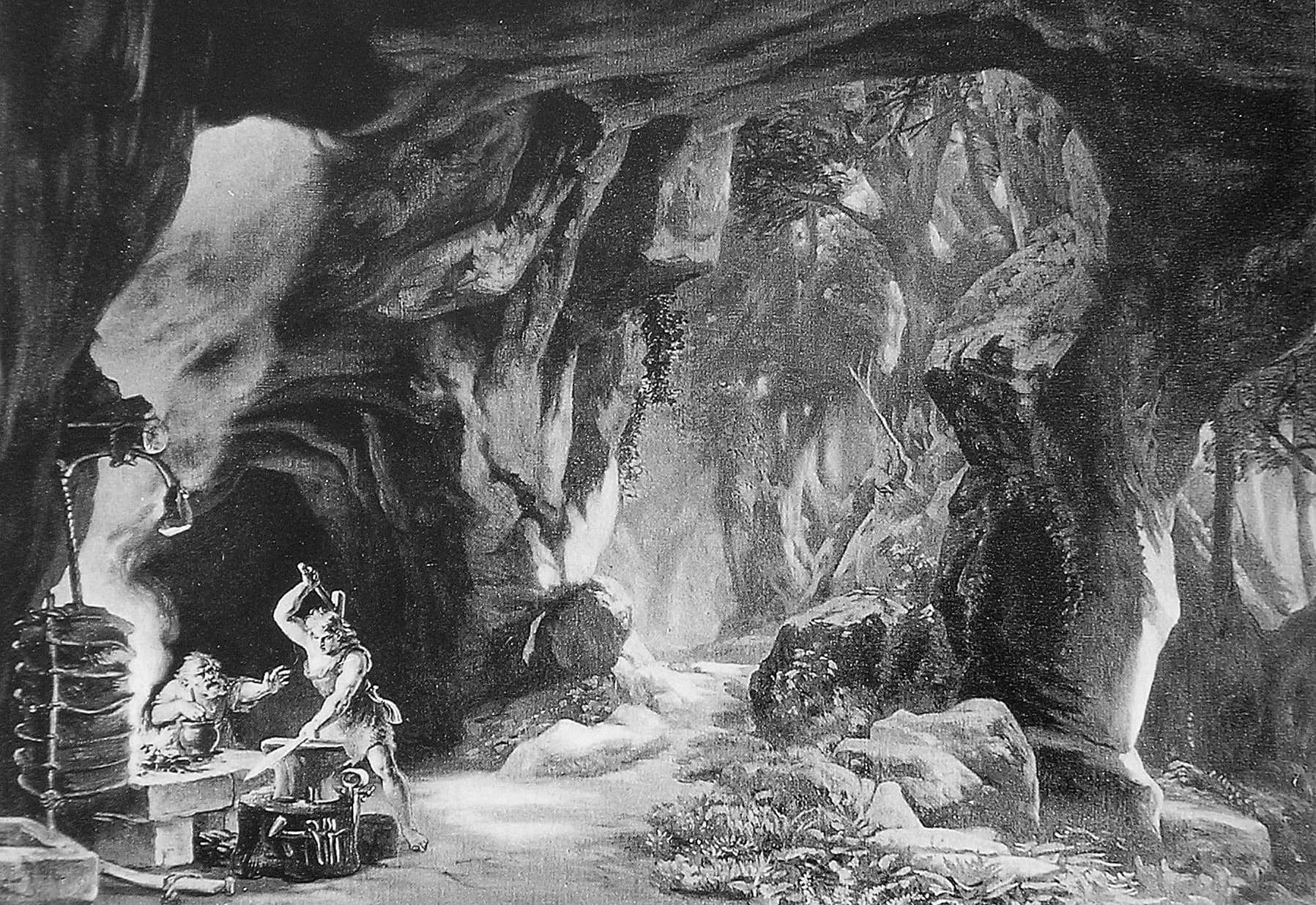
Josef Hoffmann design for Mime's cave in Siegfried

Opera world 11 / WWV 86C

Siegfried

The broken sword waits for someone who does not know how to obey.

A hero enters a world whose fear he never inherited
Scroll to enter

01 / The dramatic threshold

A hero enters a
world whose fear he never inherited

Siegfried grows up without a usable history. He questions Mime, reforges Nothung, crosses the forest and meets the old order first as a dragon, then as a wanderer blocking the road.

Fearlessness gives him access to places others cannot enter, but it also leaves him without caution, memory or social knowledge. The opera celebrates momentum while letting us hear its danger.

11 / Siegfried

Josef Hoffmann, Mime's cave, 1876

02 / The action

The world changes
in movements.

This is a dramatic map, not a replacement for the full libretto. Each movement marks a change in what the characters believe is possible.
  1. I

    The forge

    The child rejects the story he was given

    Mime's cave in the forest

    Mime cannot repair Nothung and cannot contain Siegfried's questions. After learning enough of his origins, Siegfried melts the fragments and forges the sword himself.

    Dramatic turnInheritance becomes usable only after being broken down to its material.
  2. II

    The forest

    The dragon falls and language changes

    Fafner's cave

    Siegfried kills Fafner. Tasting the dragon's blood lets him understand the Forest Bird and hear Mime's murderous intention beneath his words.

    Dramatic turnKnowledge arrives through the body, not through education.
  3. III

    The mountain

    The road through the god leads to another human being

    The foot and summit of Brünnhilde's rock

    Siegfried shatters Wotan's spear, crosses the fire and wakes Brünnhilde. For the first time he encounters fear, not before a monster, but before intimacy.

    Dramatic turnFear becomes the sign that another person cannot be conquered like an obstacle.
Josef Hoffmann design for Mime's cave in Siegfried
Archive fragment

Josef Hoffmann, Mime's cave, 1876

Image source ↗

03 / The dramatic machine

What moves
beneath the plot.

Objects, musical ideas and theatrical systems carry memory across the work. These are three ways into its deeper construction.

Fragments become action

The forge

Nothung cannot be restored by old technique. Siegfried remakes the material and changes the rhythm of the stage with every hammer blow.
A world heard before it is understood

The forest murmur

The orchestra creates an environment larger than any character's language. Listening becomes a form of orientation.

Law meets the sword it once fathered

The spear

When Nothung breaks Wotan's spear, the accumulated contracts of the old world lose their physical support.

04 / Figures in the world

Six lines of
dramatic pressure.

Each figure occupies a different distance from the work's central conflict. Voice type is included as a practical listening guide.
01

Siegfried

Tenor

A young hero without inherited fear
02

Mime

Tenor

The Nibelung smith who raises and plans to use him
03

The Wanderer

Bass-baritone

Wotan returning in the form of a questioner
04

Brünnhilde

Soprano

The sleeping Valkyrie who awakens into mortal time
05

Fafner

Bass

The former giant transformed into a dragon
06

The Forest Bird

Soprano

A voice that guides once Siegfried learns how to hear

05 / A line from the stage

Das ist kein Mann!
That is no man.

The fearless hero discovers difference before he discovers love.

Siegfried, Act III

06 / The work in time

A stage world
with a physical history.

Dates and categories anchor the experience without reducing the opera to a catalogue entry. The archive remains visible behind the theatre.
Cycle position
Second day of Der Ring des Nibelungen
Structure
Three acts
First performance
Bayreuth, 16 August 1876
Composition
Interrupted for twelve years before completion
WWV 86C

Second day of the Ring, in three acts

07 / The living work

Find the next
Siegfried.

The performance world will connect this opera to verified dates, theatres and productions across Europe. The architecture is ready for listings that can be traced directly to presenting institutions.

Open performances