Wagner
Welten
Explore
Opera archive
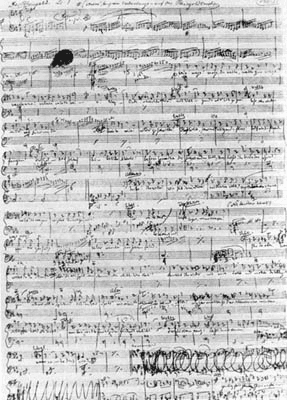
Autograph score page from Das Rheingold

Opera world 07 / WWV 86A

DasRheingold

Before language, a chord. Before law, a theft.

The first bargain already contains the end
Scroll to enter

01 / The dramatic threshold

The first bargain already
contains the end

The Ring begins in depth and ends at a shining fortress. Between those images, gold becomes a ring, labour becomes domination and the gods solve one debt by creating another.

Das Rheingold does not pause between scenes. The world changes continuously, as if the same substance were becoming water, rock, fire, cloud and architecture before our eyes.

07 / Rheingold

Autograph score page

02 / The action

The world changes
in movements.

This is a dramatic map, not a replacement for the full libretto. Each movement marks a change in what the characters believe is possible.
  1. 1

    The Rhine

    Love is renounced and gold becomes power

    The riverbed

    Alberich fails to win the Rhinemaidens, hears the condition attached to the gold and makes the renunciation that allows him to seize it.

    Dramatic turnAn insult becomes the economic law of the entire cycle.
  2. 2–3

    The debt

    A fortress is paid for with a stolen world

    A mountain height and Nibelheim

    Wotan has promised Freia to the giants. Loge proposes Alberich's treasure as payment, and the gods descend to a realm where the ring has organized labour through fear.

    Dramatic turnThe rulers condemn Alberich while copying his method.
  3. 4

    The entrance

    The gods cross a rainbow over the warning

    The heights before Valhalla

    The treasure changes hands, the ring claims its first victim, Erda warns Wotan, and the gods enter their new home while the Rhinemaidens call from below.

    Dramatic turnThe triumphant image is acoustically divided against itself.
Autograph score page from Das Rheingold
Archive fragment

Autograph score page

Image source ↗

03 / The dramatic machine

What moves
beneath the plot.

Objects, musical ideas and theatrical systems carry memory across the work. These are three ways into its deeper construction.

A world slowly becomes audible

The E-flat depth

The prelude accumulates motion without changing harmonic ground, suggesting origin as continuous emergence rather than a sudden beginning.
Value compressed into an object

The ring

Gold is transformed into command. The object travels, but every owner inherits the violence used to make it.

The stage changes substance

Transformation music

Orchestral transitions make geography fluid. The audience moves between worlds without leaving the dramatic current.

04 / Figures in the world

Six lines of
dramatic pressure.

Each figure occupies a different distance from the work's central conflict. Voice type is included as a practical listening guide.
01

Wotan

Bass-baritone

Ruler of the gods and architect of binding contracts
02

Alberich

Baritone

The Nibelung who renounces love and forges the ring
03

Loge

Tenor

Fire, intelligence and the unstable logic of escape
04

Fricka

Mezzo-soprano

Guardian of marriage and critic of Wotan's bargains
05

Fasolt and Fafner

Basses

Giants who build Valhalla and demand payment
06

Erda

Contralto

The earth's knowledge entering as warning

05 / A line from the stage

Alles, was ist, endet.
Everything that exists comes to an end.

The warning stands beneath the architecture of victory.

Erda, Scene 4

06 / The work in time

A stage world
with a physical history.

Dates and categories anchor the experience without reducing the opera to a catalogue entry. The archive remains visible behind the theatre.
Cycle position
Vorabend to Der Ring des Nibelungen
Structure
Four connected scenes without interval
First performance
Munich, 22 September 1869
First Bayreuth cycle
13 August 1876
WWV 86A

Vorabend in four scenes

07 / The living work

Find the next
Rheingold.

The performance world will connect this opera to verified dates, theatres and productions across Europe. The architecture is ready for listings that can be traced directly to presenting institutions.

Open performances